Best Mileage Cars in India 2026, By Segment
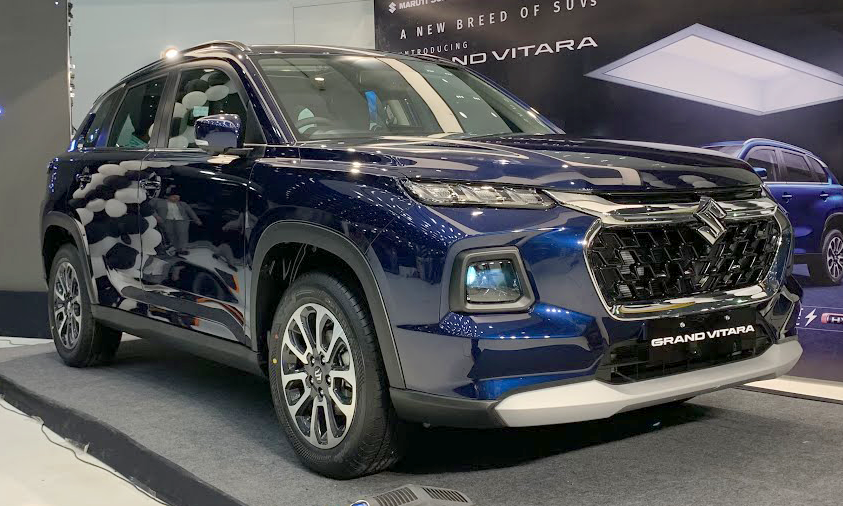 Photo: Wikimedia Commons — CC BY-SA 4.0
Mileage remains the single most decisive factor for the average Indian car buyer — more than horsepower, more than badge prestige, more than infotainment features. It makes sense: fuel is a recurring cost that compounds over years of ownership, while most other specs are one-time considerations. But "best mileage" means something different depending on what you're cross-shopping, and the honest real-world figure is almost never the one printed on the brochure.
This guide breaks down genuine mileage leaders by segment — petrol, diesel, hybrid, and electric — and explains the gap between ARAI's lab-tested numbers and what you'll actually see in daily driving.
Our Methodology All figures cited are official ARAI-certified ratings as published by manufacturers, cross-checked against insurer and automotive-publication data (see sources below). The 80-85% real-world adjustment is a widely cited industry rule of thumb, not a figure we've independently lab-tested — actual mileage varies by driving style, load, and conditions.
Why ARAI numbers never quite match your dashboard
Every mileage figure quoted in India — 20 km/l, 25 km/l, whatever — comes from ARAI (Automotive Research Association of India) testing under strictly controlled laboratory conditions: a fixed temperature, no AC load, a specific driving cycle with gentle acceleration, and a completely flat, empty test track. Real roads have none of that. Traffic, AC usage, passenger and luggage weight, tyre pressure, and driving style all pull the number down. As a rule of thumb, expect roughly 80 to 85 percent of the ARAI figure in genuine daily use — a car claiming 20 km/l will more realistically deliver 16 to 17 km/l once you factor in city traffic and air conditioning.
Petrol: still the volume leader
Among pure petrol cars, small-displacement engines paired with light kerb weight post the strongest numbers. The Maruti Suzuki Wagon R and Celerio consistently rank among the most efficient petrol hatchbacks sold in India, both benefiting from Maruti's long-refined K-series engine family. Compact sedans like the Maruti Dzire also perform strongly, since sedan aerodynamics help at highway speeds even though the car is heavier than a hatchback.
Diesel: still the highway king, in a shrinking lineup
Diesel options have thinned out considerably across the industry as manufacturers pull back small-diesel engines to meet tightening emission norms, but where diesel survives, it still delivers genuinely strong efficiency — particularly on sustained highway driving. The Hyundai Aura Diesel leads the compact sedan segment at a claimed 25.40 km/l, while the Tata Altroz Diesel remains one of the most efficient premium hatchbacks at 19.33 km/l, backed by a 5-star Global NCAP safety rating that many rivals in this price band can't match.
Hybrid: where the real efficiency jump happens
The Toyota Urban Cruiser Hyryder and Maruti Grand Vitara — mechanically the same hybrid system under two different badges — post the strongest mileage figures of any mainstream SUV sold in India today.
Self-charging strong hybrids represent the biggest genuine leap in fuel economy available to Indian buyers right now, without needing to plug in anywhere. The Maruti Suzuki Grand Vitara Alpha Smart Hybrid claims 27.97 km/l — a figure that would have sounded implausible for an SUV just a few years ago — and its platform-sibling, the Toyota Urban Cruiser Hyryder, sits close behind at 27 km/l. Both benefit from the same core insight: at low speeds and during braking in city traffic, the car frequently runs on electric power alone, exactly the driving condition where a conventional engine wastes the most fuel.
Electric: mileage isn't measured the same way
EVs don't report a km/l figure at all — instead, efficiency is measured in range per full charge, and increasingly in km per unit of electricity (kWh). Budget-friendly options like the Tata Tiago EV claim around 315 km on a full charge, while pricier SUVs from Hyundai, Maruti, and others now regularly claim 400 to 500+ km. Since electricity costs a fraction of petrol per kilometre, the EV "mileage" conversation is really a running-cost conversation — see our Petrol vs Diesel vs Hybrid vs EV guide for the full breakdown of when each powertrain actually makes financial sense.
Segment-by-segment quick reference
| Segment | Mileage leader | Claimed figure |
|---|---|---|
| Petrol hatchback | Maruti Wagon R / Celerio | ~24–25 km/l |
| Petrol/diesel sedan | Hyundai Aura Diesel | 25.40 km/l |
| Premium hatchback (diesel) | Tata Altroz Diesel | 19.33 km/l |
| SUV (hybrid) | Maruti Grand Vitara Hybrid | 27.97 km/l |
| SUV (hybrid) | Toyota Urban Cruiser Hyryder | ~27 km/l |
| Electric hatchback | Tata Tiago EV | ~315 km range |
What actually moves the needle in real-world driving
Beyond which car you buy, a handful of habits matter more than most people realise: keeping tyres properly inflated (under-inflated tyres can cost 3-5% in efficiency), avoiding unnecessary idling, and driving smoothly rather than aggressively accelerating and braking. None of this changes which car tops a mileage chart, but it's the difference between actually achieving 80-85% of the claimed figure versus falling well short of it.
The bottom line: if pure fuel economy is your top priority and you're not ready for a full EV, a strong hybrid SUV like the Grand Vitara or Hyryder currently offers the best combination of real-world efficiency and everyday usability available in India — beating both petrol and diesel by a wide margin in city-heavy driving, without any of the range anxiety or charging-infrastructure dependency that comes with going fully electric.
Sources: ICICI Lombard, GoDigit, Zurich Kotak (ZKGI), ZigWheels — mileage figures current as of August 2026, ARAI-claimed unless stated otherwise. Image: Wikimedia Commons (CC BY-SA / public domain).