Decoding BMW's Naming System: What All Those Numbers and Letters Mean
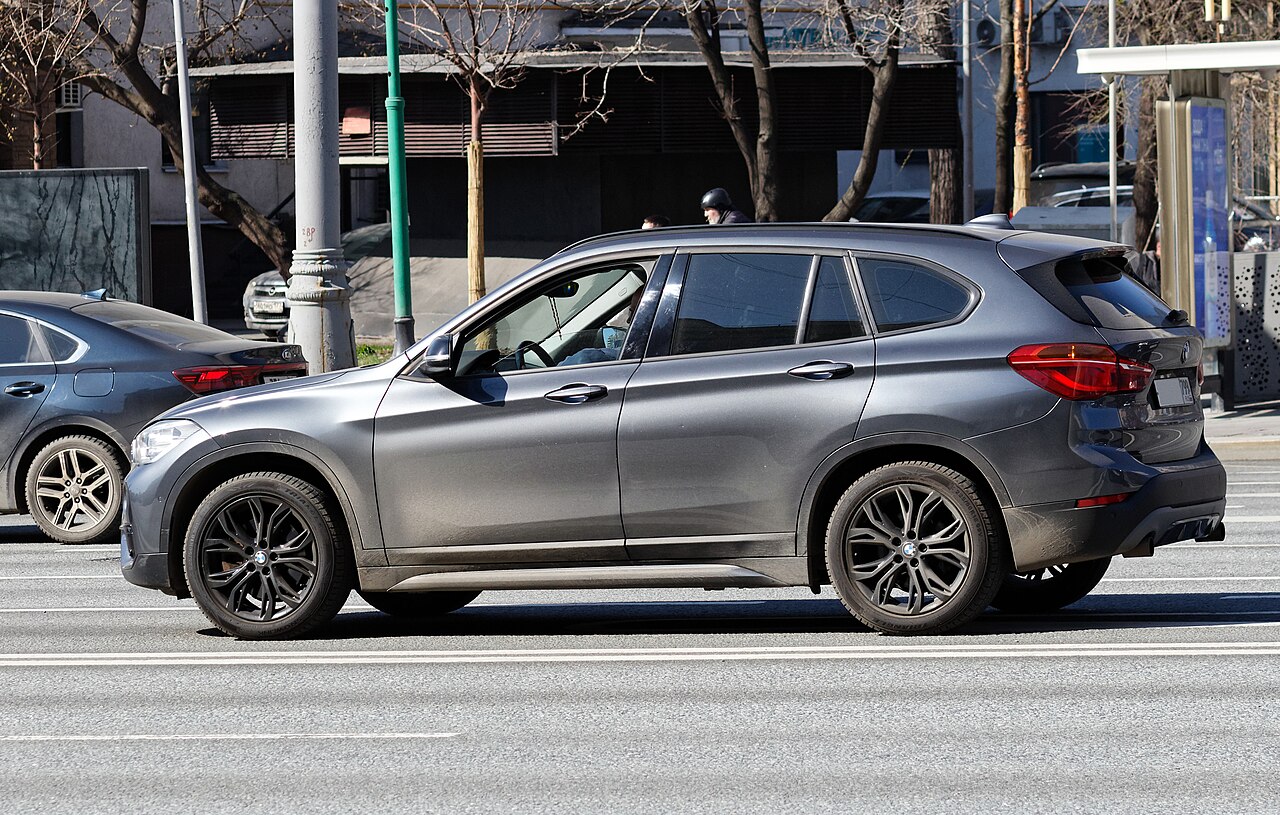 Photo: Wikimedia Commons — CC BY-SA 4.0
Stand in a BMW showroom for ten minutes and you'll hear a small alphabet soup float past: 320i, X5 xDrive40i, M340i, i4 eDrive40, 530e. To someone outside the brand, it sounds like a password generator. To BMW, it's actually a remarkably consistent system — once you know the code, you can look at almost any BMW badge and know exactly what's under the bonnet, how it's powered, and roughly where it sits in the range.
This guide breaks down that code: the Series numbers, the body-type letters (X, Z, i, M), the engine digits, and the suffixes that tell you about drivetrain and trim. None of it is arbitrary — BMW has used a version of this system since the 1970s, and it still holds up today, even as electric and hybrid models complicate the picture.
The Series number: BMW's size and class ladder
The first digit (or two) in a BMW name tells you which "Series" the car belongs to — and Series roughly correlates to size, price, and market position. Lower numbers are smaller and more affordable; higher numbers are larger and more expensive. It's not a perfect rule, but it's a reliable starting point.
| Series | Body type | Positioning |
|---|---|---|
| 1 Series | Hatchback | Entry-level, compact |
| 2 Series | Coupe / Gran Coupe / Active Tourer | Compact, sportier lean |
| 3 Series | Sedan / Touring (wagon) | The core BMW — compact executive |
| 4 Series | Coupe / Gran Coupe / Convertible | Sportier sibling of the 3 Series |
| 5 Series | Sedan / Touring | Mid-size executive, the "business" BMW |
| 6 Series | Gran Turismo (China/select markets) | Large 4-door coupe-style |
| 7 Series | Sedan | Full-size luxury flagship |
| 8 Series | Coupe / Convertible / Gran Coupe | Grand tourer, top-tier performance/luxury |
In India specifically, the 3 Series and 5 Series do the heavy lifting — they're the volume sellers. The 7 Series sits at the top as the flagship, usually seen with a chauffeur behind the wheel rather than the owner.
The letter prefixes: when it's not a sedan
Not every BMW is a traditional sedan or coupe. A letter before the number tells you the car has stepped outside that shape entirely.
SUVs and crossovers
X1, X3, X5, X7 and so on — roughly following the same size logic as the numbered Series. An X3 sits above an X1, below an X5. The number after "X" does NOT correspond directly to a numbered Series of the same digit; it's its own separate ladder.
Fully electric models
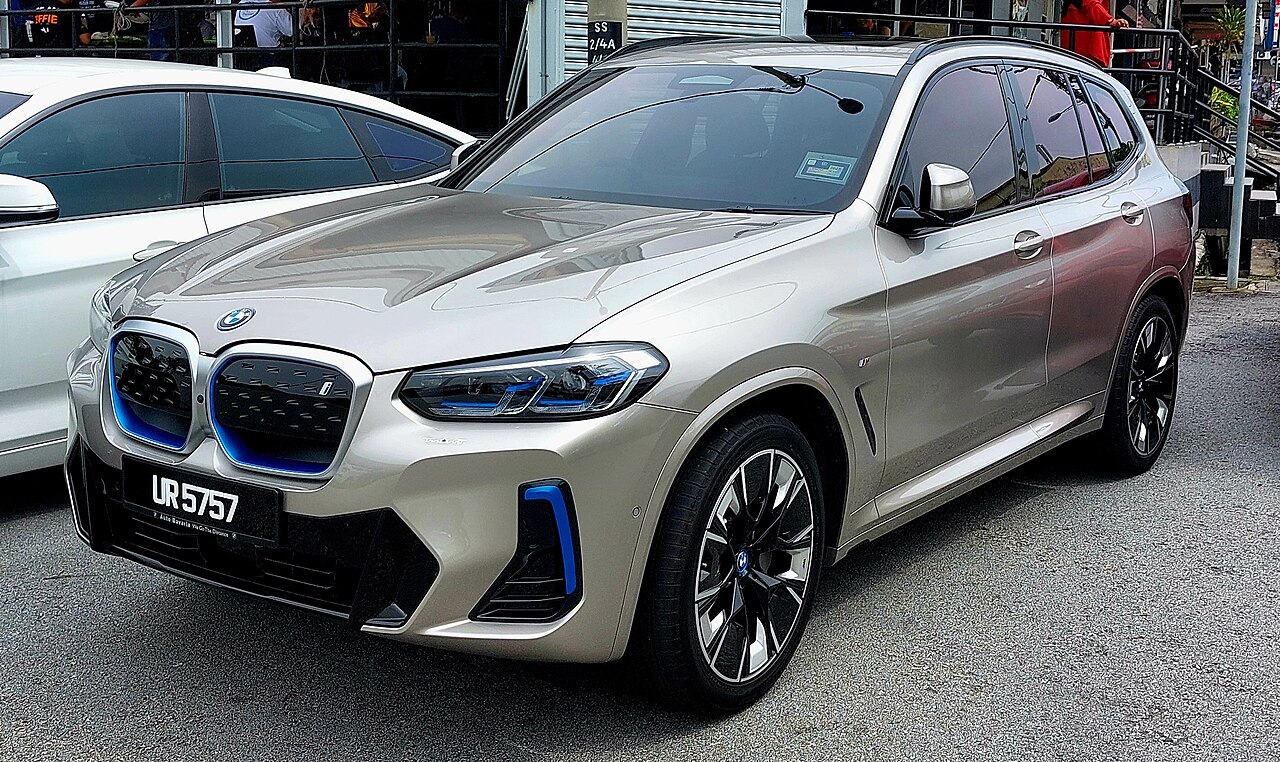
i4, i5, i7, iX, iX1, iX3 — pure battery-electric BMWs. The "i" sub-brand started with the i3 and i8 in 2013 and has since expanded to cover most of the lineup, including electric versions of existing Series (i4 is electric, based loosely on the 4 Series shape; i5 is the electric 5 Series).
High-performance division
Either a standalone M car (M2, M3, M4, M5) built from the ground up by BMW M GmbH, or an "M Performance" variant of an existing car (M340i, M240i) — tuned but not a full M product. The distinction matters: a true M car gets a unique engine and chassis; an M Performance car gets a hotter version of the standard engine.
Roadsters (mostly retired)
Historically BMW's 2-seat sports car line — Z3, Z4. Only the Z4 remains in production today, built alongside Toyota's Supra on a shared platform.
The numbers after the Series: engine size, not always literally
A "330i" doesn't have a 3.3-litre engine. It has a 2.0-litre turbo four. The number is a performance tier, not a displacement figure.
This is where BMW's naming gets genuinely confusing, because it used to be literal and no longer is. Decades ago, "325i" meant a 2.5-litre engine. Today, with turbocharging letting small engines produce big power, BMW keeps the two-digit number as a performance grade rather than a true displacement measurement. Higher numbers mean more power, roughly in these bands:
- 20i / 20d — entry-level petrol or diesel, smallest engine in the range for that Series
- 30i / 30d — mid-tier, noticeably quicker, usually the sweet spot most buyers choose
- 40i / 40d — a step up again, often with a six-cylinder engine where the 20i/30i use four-cylinders
- M340i / M550i etc. — the M Performance tier, sitting just below a full M car
The letter after the number tells you the fuel type: i for petrol, d for diesel, and increasingly e for plug-in hybrid (330e, 530e, X5 xDrive50e). BMW has been quietly phasing out standalone diesel offerings in several markets as electrification accelerates, though diesel remains common in India for the 5 Series and X-line SUVs, where long highway running favours it.
xDrive, and other suffixes worth knowing
A few more tags show up regularly on Indian price lists, and each one means something specific:
- xDrive — BMW's all-wheel-drive system. A "330i" is rear-wheel-drive; a "330i xDrive" sends power to all four wheels. Common on SUVs and increasingly offered on sedans for markets with variable weather or road conditions.
- Gran Coupe — a four-door body style with a coupe-like sloping roofline, applied to the 2, 4, 6, and 8 Series.
- Touring — BMW's term for a wagon/estate body, mostly seen on the 3 Series and 5 Series in international markets, rare in India.
- Gran Turismo (GT) — a taller, more spacious hatchback-sedan hybrid shape, used on select 5 and 6 Series models for extra headroom and boot space.
- Long Wheelbase (LWB / L) — an extended-wheelbase version with more rear legroom, common on the 5 Series and 7 Series specifically for markets like India and China where rear-seat comfort sells cars.
Trim levels: Sport, Luxury, M Sport
Layered on top of all of the above are trim packages, which change the styling and equipment without changing the engine or drivetrain designation:
- Luxury Line — chrome trim, plusher upholstery, a more understated, formal look
- Sport Line — darker trim accents, sportier bumpers, firmer suspension tuning
- M Sport — the most aggressive standard trim, with M-specific bodywork, larger wheels, and sport seats — without the full mechanical upgrade of an actual M car
In India, M Sport has become the default choice for a large share of buyers, even on non-M cars — it's become something of a style statement independent of actual performance intent.
Putting it together
Take a real example: BMW X5 xDrive40i M Sport. Breaking it down using everything above — X5 tells you it's a mid-to-large SUV. 40i tells you it's in the higher petrol performance tier, likely a six-cylinder engine. xDrive confirms all-wheel-drive. M Sport tells you it has the aggressive styling package, without being a full M car. Once you can read that string, every BMW badge on the road becomes legible.
The one place this system bends is the electric lineup, where "i" replaces the fuel letter entirely and the number often refers to which conventional Series the car is positioned alongside, rather than a literal performance tier — the i4 sits near the 4 Series in size and price, the i5 near the 5 Series, and so on. As BMW's Neue Klasse platform (starting with the iX3) rolls out through the rest of the 2020s, expect the naming system to keep evolving, but the core logic — Series for size, letters for body type, numbers for tier, suffixes for drivetrain and trim — will likely hold.
Sources: BMW Group global product literature, BMW India press materials. Image: Wikimedia Commons (CC BY-SA / public domain).