Decoding Mercedes-Benz's Naming System: Classes, AMG, and the End of EQ
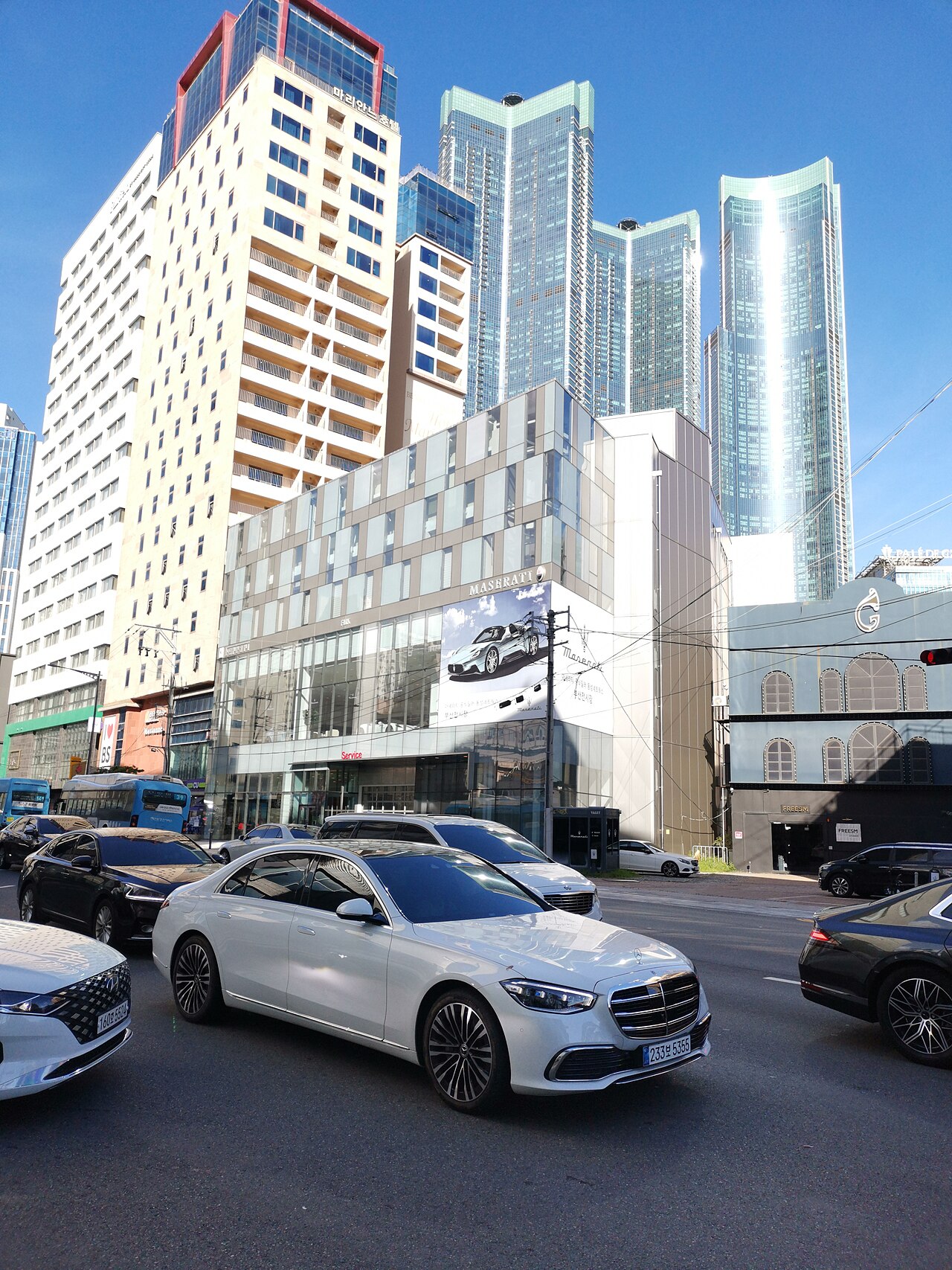 Photo: Wikimedia Commons — CC BY-SA 4.0
Mercedes-Benz has one of the oldest and, on paper, most logical naming systems in the industry — a single letter tells you the "Class," and everything else layers on top. But the brand has also spent the last five years running an experiment with a completely separate electric naming scheme (EQ), and in 2025 quietly admitted the experiment didn't work. That reversal is actually the most useful thing to understand right now, because it explains why a 2026 Mercedes badge might look different from one built two years ago, even on what's functionally the same car.
This guide covers both halves: the enduring Class-letter system that's stayed consistent for decades, and the newer story of what happened to "EQ" — and what's replacing it.
The Class letter: Mercedes' core organising idea
Every mainstream Mercedes sedan or estate carries a single letter that defines its "Class" — its size and market position. This has been stable since the 1990s and remains the backbone of the whole system.
| Class | Positioning |
|---|---|
| A-Class | Compact hatchback, entry point to the brand |
| C-Class | Compact executive sedan/estate — the volume seller |
| E-Class | Mid-size executive — the traditional "business" Mercedes |
| S-Class | Full-size flagship luxury sedan |
| CLA | Compact 4-door coupe, sits alongside the A-Class |
| CLS | Larger 4-door coupe, sits alongside the E-Class |
| G-Class | Boxy off-road SUV — the "G-Wagen," a category of its own |
In India, the C-Class and E-Class carry the brand — the E-Class in particular is deeply associated with chauffeur-driven use, much like the BMW 7 Series or Audi A6 LWB. The S-Class sits above both as the aspirational flagship.
The SUVs: GL-prefix, then a Class letter
Mercedes SUVs follow a related but distinct pattern — most begin with "GL" followed by the letter of the sedan Class they're most closely related to in size:
Compact SUV
Related in size to the A-Class. The smallest and most affordable Mercedes SUV.
Compact SUV, 7-seat option
Boxier than the GLA, with an optional third row — a practicality-first SUV.
Mid-size SUV
Related to the C-Class. Mercedes' best-selling SUV globally, and the direct rival to the BMW X3 and Audi Q5.
Large and full-size SUV
GLE relates to the E-Class in size; GLS is the flagship SUV, roughly parallel to the S-Class. The Maybach GLS sits above even that.
The G-Class stands apart from this logic entirely — it's not "related" to any sedan Class. It's Mercedes' original military-derived off-roader, now a status symbol in its own right, and it keeps its own numbering (G 550, G 63) rather than a GL-prefix.
AMG: two very different meanings
An "AMG Line" car has sportier looks. An "AMG" car — no "Line" — has a genuinely different, hand-built engine. The two are not the same thing, even though they look similar on a spec sheet.
This is the single most common point of confusion for buyers, so it's worth being precise:
- AMG Line — a styling and trim package: different bumpers, larger wheels, sport seats, a firmer suspension tune. The engine underneath is unchanged from the standard car. This is the equivalent of BMW's "M Sport" package — appearance without the mechanical upgrade.
- Full AMG models (C 63, E 63, G 63) — built by Mercedes-AMG's performance division, often with a genuinely different engine, unique chassis tuning, and in some cases hand-assembly by a single technician whose signature appears on the engine cover. These are true performance flagships, priced significantly above the standard car.
The numbers after the letter: power tier, not displacement
Similar to BMW, the two-to-three digit number after a Mercedes Class letter (C 300, E 450, S 580) is a power tier rather than a literal engine size — the same badge logic that's confused BMW buyers for years applies here too. Higher numbers mean more power. The letter suffix after the number tells you the drivetrain:
- d — diesel (C 220d, E 300d)
- e — plug-in hybrid (C 300e, E 300e)
- 4MATIC — Mercedes' all-wheel-drive system, added as a suffix (C 300 4MATIC)
What happened to EQ — and what replaces it
Starting in 2021, Mercedes ran a bold experiment: give every electric model an entirely separate name, prefixed with EQ. A combustion E-Class became an electric EQE. A combustion GLE became an electric EQE SUV — using the same name as the sedan, which was already a warning sign. The idea was to make EVs instantly recognisable at a glance.
It didn't work. Buyers found it confusing rather than clarifying — an EQE SUV and an EQE Sedan share almost nothing except a name, and shoppers regularly couldn't tell what size or type of car they were looking at. Mercedes has now confirmed it is phasing out the EQ naming convention entirely. The EQE Sedan and EQE SUV are being discontinued in 2026, and rather than replacing them with new "EQ" names, Mercedes is folding electric versions back into the existing Class system.
The new logic, confirmed for the 2026–2027 rollout: an electric C-Class will simply be called the C-Class, badged with an EQ Technology descriptor rather than a separate model name. The same applies to the incoming electric GLC. This mirrors exactly what BMW does with its "i" prefix and what Audi has separately decided for e-tron — the industry is converging on "same name, different powertrain badge" rather than entirely parallel electric model lines.
Putting it together
Take Mercedes-AMG GLC 63 S E Performance 4MATIC+. GLC places it as a mid-size SUV. 63 signals the full-AMG performance tier, not just an AMG Line trim. S is an even hotter AMG sub-variant. E Performance indicates a plug-in hybrid AMG powertrain — a newer category combining a combustion AMG engine with electric assistance for extra performance, not just efficiency. 4MATIC+ confirms all-wheel drive with a more track-focused calibration than standard 4MATIC.
The direction of travel is clear: Mercedes is simplifying, not complicating, going into the second half of the 2020s. The Class-letter system that's carried the brand since the 1990s is staying exactly as it is; the short-lived EQ detour is being quietly folded back in. If you're shopping for a Mercedes in 2027 or later, expect the badge on an electric C-Class to say, simply, "C-Class" — with the electric part indicated elsewhere, not baked into the name itself.
Sources: Mercedes-Benz Group investor communications, Autocar, Motor1, Electrive, CarExpert. Image: Wikimedia Commons (CC BY-SA / public domain).