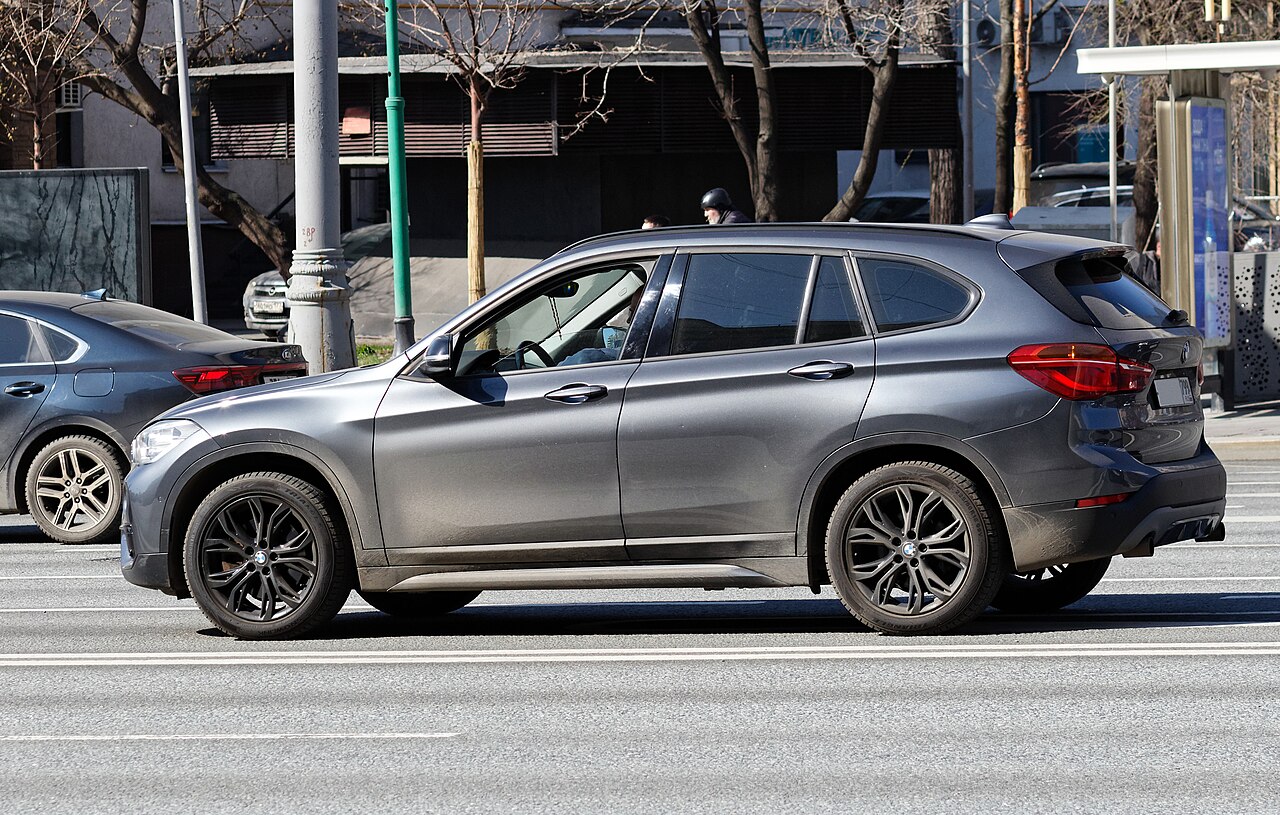
Decoding Audi's Naming System: A, Q, S, RS — and the Numbering Scheme That Lasted One Model
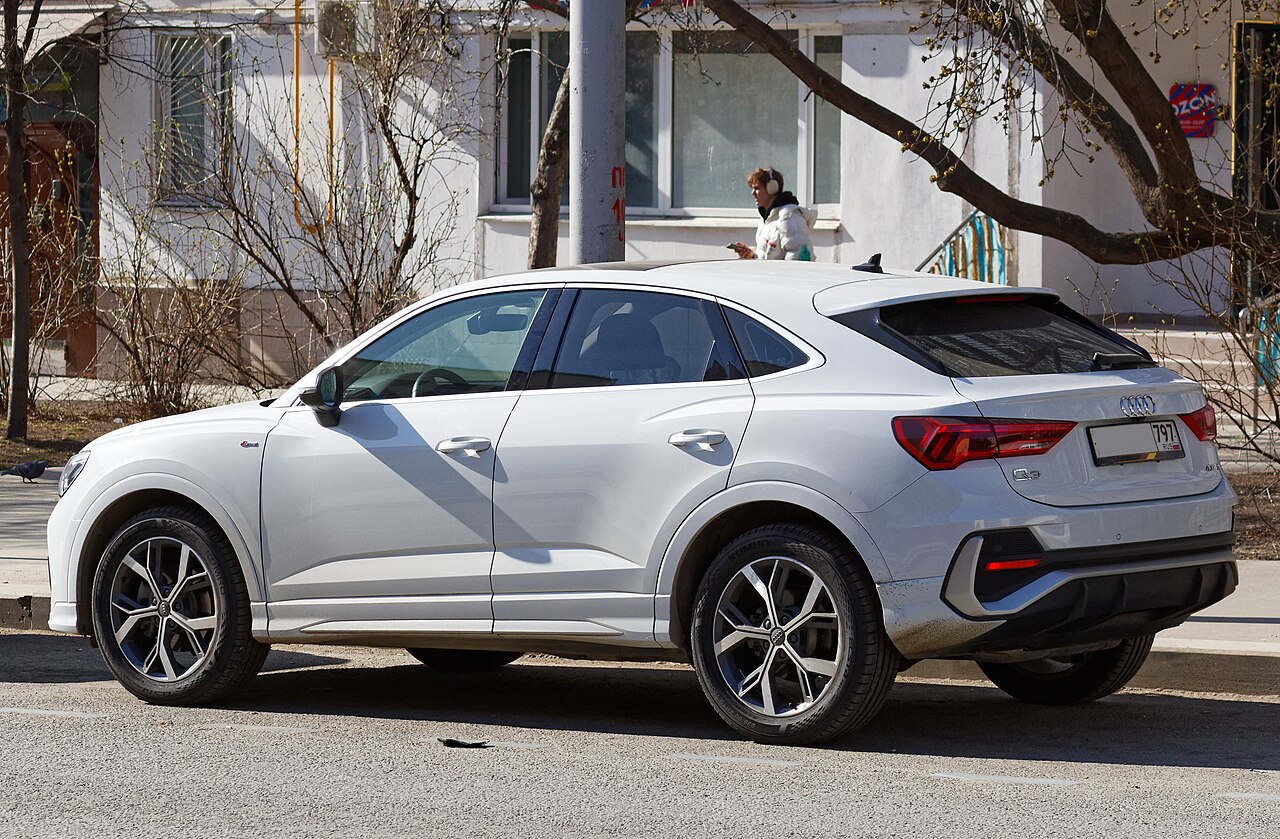 Photo: Wikimedia Commons — CC BY-SA 4.0
Of the three big German luxury brands, Audi has had by far the most turbulent recent history with car names. Where BMW and Mercedes have kept their core naming logic largely stable for decades, Audi tried something genuinely new in 2023 — and reversed it less than two years later, after just one model had actually launched under the new rules. It's a useful story precisely because of how quickly it failed, and it tells you a lot about why car names look the way they do today.
This guide covers Audi's stable core system — A, Q, S, RS, TFSI, TDI — and then walks through exactly what happened with the numbering experiment, since that's the part causing the most confusion for anyone shopping for an Audi right now.
The stable part: A for sedans, Q for SUVs
This half of Audi's system hasn't changed and isn't going to. Every mainstream Audi carries a letter that tells you the body type, and a number that tells you the size and market position.
| Prefix | Body type |
|---|---|
| A1 / A3 | Hatchback / compact sedan |
| A4 / A5 | Compact executive sedan and coupe |
| A6 / A7 | Mid-size executive sedan and Sportback |
| A8 | Full-size luxury flagship sedan |
| Q2 / Q3 | Compact SUVs |
| Q5 | Mid-size SUV |
| Q7 / Q8 | Large and flagship SUVs |
As Audi itself puts it: the numbers, from 1 to 8, are meant to give a clear classification independent of powertrain type — size and positioning, nothing more. That's the entire point of the system, and it's also exactly what got broken and then fixed again in the section below.
S and RS: Audi's own two-tier performance system
Like BMW's M and Mercedes' AMG, Audi has its own escalating performance tiers — but structured slightly differently, as two distinct steps rather than a "line" plus a "full" version:
Sport performance tier
A genuinely more powerful engine and sportier chassis tuning than the standard car — S3, S4, SQ5 — but stopping short of Audi Sport's most extreme output. Comparable to BMW's M340i tier or a mid-tier AMG.
Audi Sport's top tier
Built by Audi Sport GmbH, with the most powerful engines Audi offers, aggressive aerodynamics, and track-focused chassis setups. RS3, RS6, RS Q8 — the direct equivalent of a full BMW M car or full AMG model.
Unlike Mercedes, Audi doesn't really have a cosmetic-only "Line" trim carrying the S or RS name — its closest equivalent is the "S line" trim package, which is a styling option available even on non-S cars, and is arguably Audi's single most confusing naming decision, since "S line" and "S" (or "S3", "S4") sound related but mean genuinely different things. An A3 with the S line package is still a regular A3 underneath.
Powertrain letters: TFSI, TDI, e-tron
The suffix after the model number tells you what's powering the car:
- TFSI — turbocharged petrol (Turbo Fuel Stratified Injection)
- TDI — turbocharged diesel
- e-tron — electric or plug-in hybrid, Audi's long-standing electrification badge
- quattro — Audi's famous all-wheel-drive system, added as a suffix (A4 TFSI quattro)
These have stayed consistent through everything else that's changed, and are unlikely to move — quattro in particular is one of Audi's oldest and most recognisable pieces of brand equity, dating back to the original rally-winning Quattro of the 1980s.
The odd-even experiment: a naming scheme that lasted one model
Here's where it gets genuinely interesting. In 2023, then-CEO Markus Duesmann announced a new rule: odd numbers would mean combustion engines, even numbers would mean fully electric. Under this system, the combustion A4 would become the A5, and its electric replacement would take over the A4 name. The combustion A6 would become the A7, with an electric A6 e-tron in its place.
The logic sounded reasonable on paper — glance at a badge, instantly know the powertrain. In practice, it created chaos:
Audi CEO Markus Duesmann announces the odd/even system. Combustion cars get odd numbers, EVs get even numbers, starting with the next-generation A4/A5 transition.
The B10-generation combustion car that would have been "A4" launches instead as the A5 — its first real-world application. Long-time Audi owners are confused: why does a familiar nameplate suddenly not exist for the combustion version?
Audi officially reverses the policy. Numbers 1 through 8 return to indicating size and position only, regardless of powertrain. Sales and dealer feedback cited confusion as the primary reason.
The next A6 generation launches simply as the A6 across all powertrains — badged A6 TFSI, A6 TDI, or A6 e-tron depending on what's under the bonnet, rather than getting a different model number for the electric version.
"The numbers — currently from one to eight — enable a clear classification independent of the type of powertrain." — Audi, February 2025, explaining the reversal
The one asymmetry left over from the experiment: Audi has said it won't retroactively rename the A4 and A5 back to a single nameplate, even though they're now essentially the same car with different engines under the hood. So for the time being, A4 and A5 remain separate names for what the old logic would have called one car with two engine options — a small, permanent scar from a two-year detour.
Putting it together
Take Audi SQ5 Sportback TDI quattro. Q5 places it as a mid-size SUV. The S prefix confirms the sport performance tier — a genuinely quicker, more focused version of the standard Q5. Sportback indicates the coupe-roofline body variant. TDI tells you it's diesel-powered. quattro confirms all-wheel drive. Nothing in that name refers to a numbering scheme based on power output or an odd/even electric signal — because, as of 2025, Audi has deliberately gone back to keeping numbers about size alone.
The broader lesson from Audi's detour is one the whole industry seems to be learning at the same time: buyers don't want two parallel naming universes for combustion and electric cars. BMW never separated its numbering this way. Mercedes tried it with EQ and is now unwinding it. Audi tried it more aggressively, with actual renumbering, and reversed course fastest of all. Expect "same name, different badge for the powertrain" to be the industry standard by the time the next generation of electric SUVs and sedans arrives.
Sources: Audi AG statements, What Car?, Carscoops, Electrive, Regit, Nationwide Vehicle Contracts. Image: Wikimedia Commons (CC BY-SA / public domain).