VinFast in India: The Vietnamese EV Maker Betting Big on Tamil Nadu
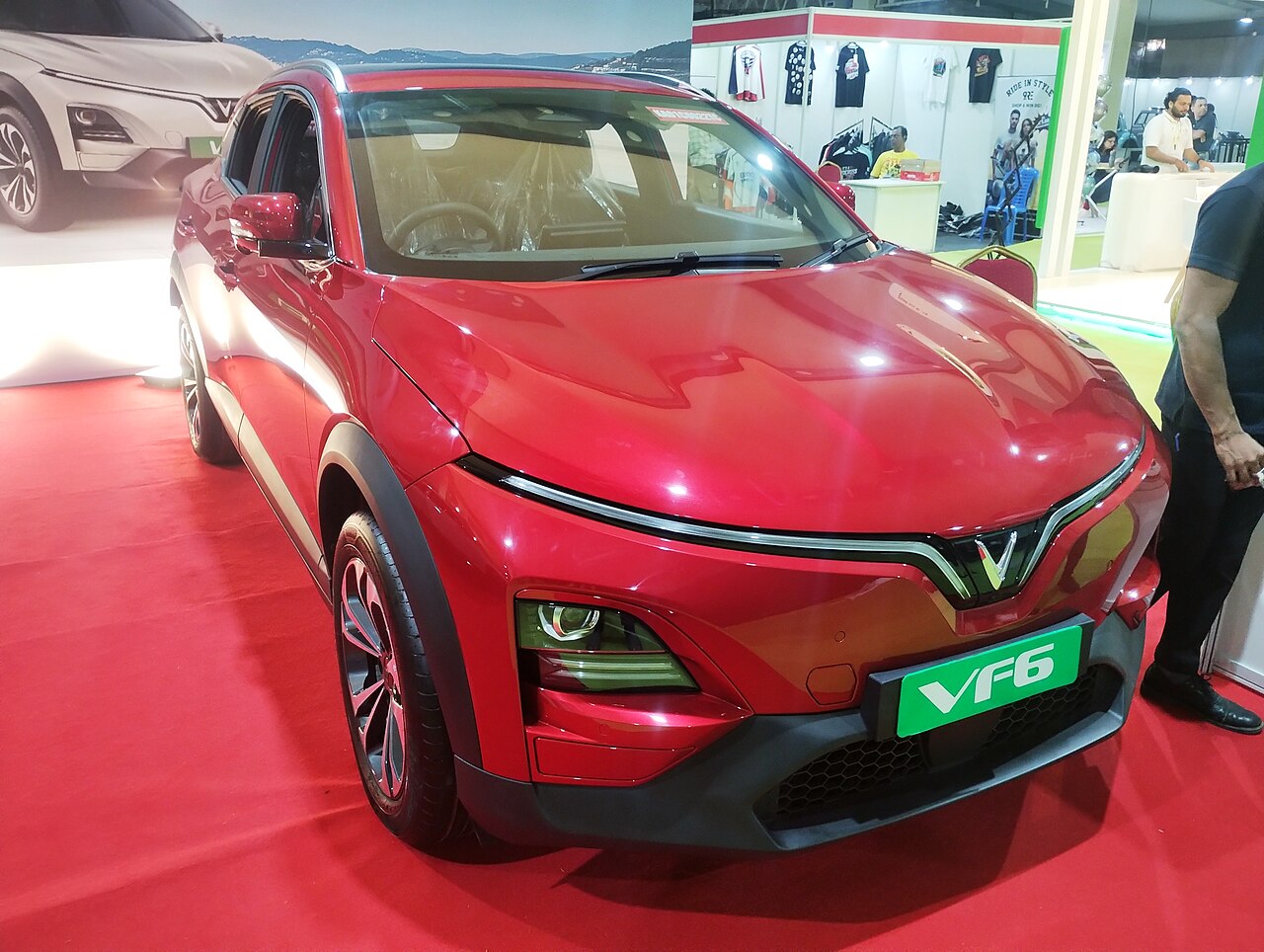 Photo: Wikimedia Commons — CC BY-SA 4.0
Most new entrants to India's car market start cautiously — an import here, a dealership network there, a wait-and-see approach before committing real capital. VinFast did the opposite. The Vietnamese electric vehicle maker walked in with a 00 million factory already under construction, a billion total investment plan, and two SUVs priced to directly challenge Tesla within weeks of Tesla's own India debut. It's one of the most aggressive market entries any automaker has attempted in India in years.
Who is VinFast, and why does a Vietnamese company have this kind of capital
VinFast is a subsidiary of Vingroup, Vietnam's largest conglomerate, founded by Pham Nhat Vuong — Vietnam's richest man, whose business empire genuinely began as an instant noodle company in Ukraine in the 1990s before expanding into real estate, hospitals, schools, and eventually automobiles. That diversified, deep-pocketed backing is precisely what's let VinFast pursue an entry strategy few pure automotive startups could attempt: building full manufacturing capacity in a new market before proving significant sales volume there.
"We are turning our focus to India — our next growth frontier." — Pham Sanh Chau, VinFast's Asia CEO
The Tamil Nadu factory: a real, physical bet
VinFast broke ground on its Thoothukudi, Tamil Nadu facility in February 2024, and opened it on August 4, 2025, after some delay from an originally planned June 30 start. The 160-hectare (400-acre) plant initially produces 50,000 EVs annually, with capacity to scale to 150,000 — a number that would exceed VinFast's entire global output from the previous year. The company scouted 15 locations across six Indian states before settling on Tamil Nadu, drawn by the state's established auto manufacturing base, skilled workforce, and proximity to a major port for potential regional exports.
The location choice matters beyond logistics. India has actively discouraged pure vehicle imports through high duty rates specifically to encourage local manufacturing — the same policy pressure Tesla has had to navigate. VinFast's willingness to build locally from day one, rather than testing the market with imports first, gave it both a pricing advantage and a warmer regulatory reception than manufacturers who've tried to sell fully-imported vehicles at premium prices.
Why VinFast, and not just another Chinese EV maker
India has been notably resistant to Chinese automotive investment since border clashes in 2020 — BYD, for instance, was blocked from building its own India factory and had to pursue a joint-venture path instead, much like SAIC's MG Motor partnering with India's JSW Group. VinFast, as a Vietnamese company, carries none of that geopolitical friction, giving it a comparatively clear path to build wholly-owned manufacturing that Chinese rivals have had to work around.
The launch itself: VF6 and VF7, priced to disrupt
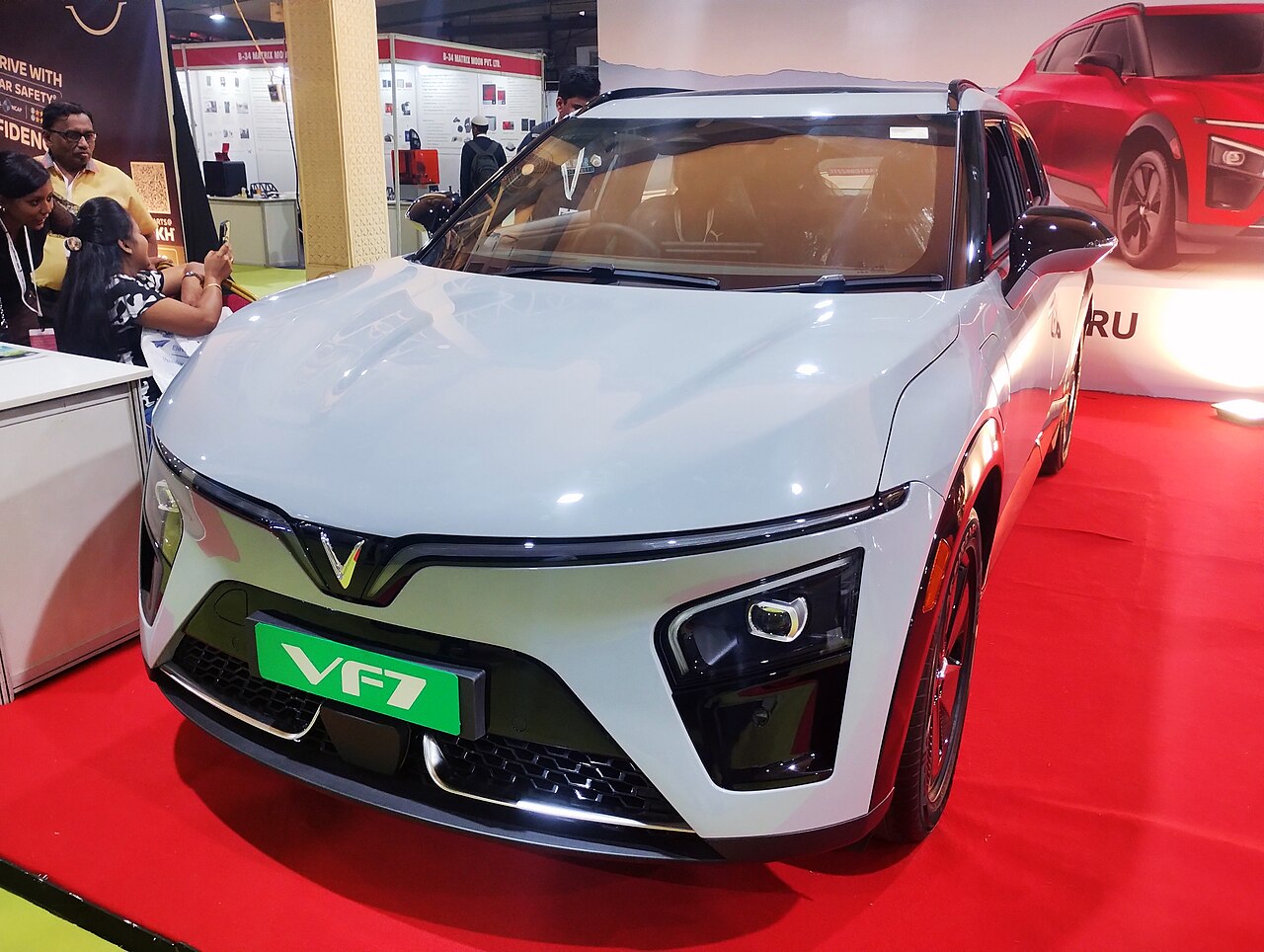
VinFast unveiled its first India-bound models — the VF6 and VF7 — at the Bharat Mobility Global Expo in January 2025, notably developing the world's first right-hand-drive versions of both specifically for the Indian market. Commercial sales began on September 6, 2025, positioning VinFast's pricing to directly rival Tesla, which had opened its first India showroom just weeks earlier. We've covered both models in full detail separately — see the VF6 and VF7 feature breakdowns linked below.
The real challenges ahead
| Challenge | Why it matters |
|---|---|
| Thin charging network | VinFast's proprietary V-Green network has just over 100 functional chargers nationwide as of 2026 — a genuine limitation for road-trip usability |
| No established India service history | Unlike Tata, Mahindra, or Hyundai, VinFast has zero long-term reliability track record in Indian conditions |
| Ride-hailing strategy may not translate | VinFast leans heavily on its own taxi subsidiary for volume in other markets, but India's Uber-Ola duopoly favours cheaper models than VinFast currently offers |
| Idle capacity at home | VinFast's Vietnam factory has operated at as low as 12% capacity — a reminder that ambitious capacity plans don't guarantee matching demand |
VinFast's home-market Vietnamese factory can produce 250,000 EVs annually but has struggled with utilisation, and almost all of VinFast's global deliveries to date have gone through Green and Smart Mobility, a VinFast-affiliated ride-hailing subsidiary rather than individual retail buyers. Whether that same volume strategy can work in India — where Uber and Ola already dominate ride-hailing and favour cheaper vehicles than VinFast's current lineup — remains a genuine open question industry analysts have flagged directly.
What VinFast's bet says about India's EV market
Electric vehicles made up roughly 2.5% of the more than 4 million cars sold in India in the most recent full year of data, against a government target of 30% by 2030 — a gap that represents exactly the kind of long-term opportunity VinFast, backed by Vingroup's patient capital, appears willing to wait out. Whether that patience translates into a durable position in a market already crowded with Tata, Mahindra, BYD-via-partnership, Tesla, and a wave of new domestic EV launches will likely take several years to answer — but the scale of the initial bet, a real factory before real volume, is not something many new entrants have been willing or able to match.
Sources: Washington Post, Fortune, Rest of World, TechCrunch, Reuters, Malay Mail, Seeking Alpha — figures current as of September 2026. Image: Wikimedia Commons (CC BY-SA 4.0), photographed at the 4th International Auto Show, Bangalore 2025.